

♥ Wishlist
Comparez 15 produits Cloueur sans fil : précision et liberté de mouvement vérifiés en France. Consultez les avis, les notes, les avantages, les inconvénients et notre guide d'achat, mis à jour pour October 2026.
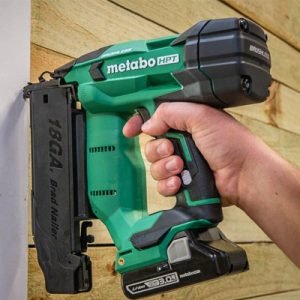
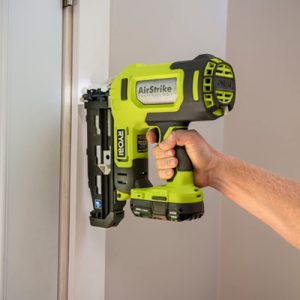
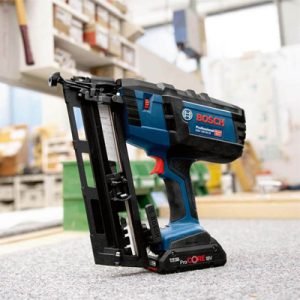
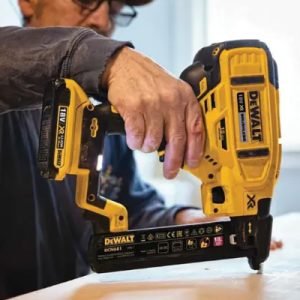
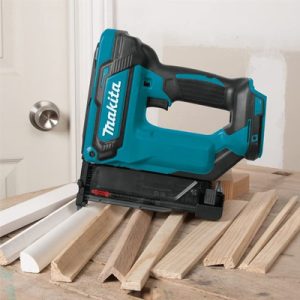
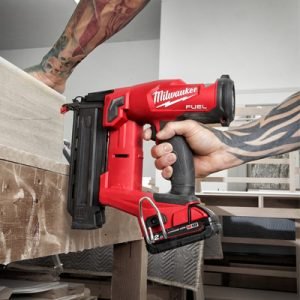

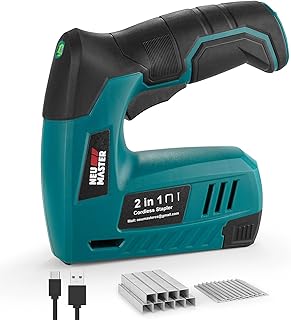


A cordless nail gun can make repetitive fastening considerably faster and more convenient than a traditional hammer, pneumatic nailer or corded tool. The main advantage is freedom of movement: there is no compressor hose, electrical cable or air supply to manage. For renovation work, interior finishing, carpentry, furniture projects and general woodworking, this can make a substantial difference to workflow.
However, cordless nailers are not interchangeable. A compact brad nailer intended for delicate trim is fundamentally different from a framing nailer designed for structural timber. Before comparing models, identify the type of fastener required, the material being joined, the expected workload and the level of finish required. These factors are more important than choosing a tool simply because it has a higher voltage or a larger battery.
The term cordless nail gun covers several distinct tool categories. Selecting the wrong category can result in poor holding power, damaged materials, unsuitable fasteners or unnecessary expense.
Brad nailers generally use relatively thin-gauge nails and are well suited to finishing applications where the fastener needs to leave a small hole. Typical uses include fixing mouldings, decorative trim, small wooden components and lightweight interior work.
They are particularly useful when appearance matters because smaller nails can be less conspicuous after filling and finishing. A brad nailer should not be selected for applications that require the structural holding power of larger framing nails.
Finish nailers typically accommodate thicker nails than brad nailers and are intended for applications such as door and window trim, skirting boards, cabinetry components and heavier finishing work. They offer a useful balance between holding strength and a relatively discreet finished appearance.
When comparing finish nailers, pay attention to the supported nail length range, magazine capacity, depth adjustment and whether the tool accepts the fastener type commonly available for your projects in France.
Framing nailers are designed for substantially heavier fastening applications involving timber construction. They are appropriate for demanding woodworking and construction tasks where longer and thicker nails are required.
A framing nailer is generally larger and heavier than a brad or finish nailer. Battery capacity, tool balance and magazine design therefore become especially important when the tool will be used for extended periods.
Some battery-powered fastening tools are designed around staples rather than conventional nails, while certain systems support more than one fastening format. These can be useful for upholstery, insulation-related tasks, thin panels or other specialist applications, but they should not automatically be treated as substitutes for a dedicated nailer.
Battery performance is one of the most important differences between cordless nailers. A tool that appears attractive because of its compact dimensions may be less practical if its battery runs out quickly during demanding work.
Most modern cordless power-tool ecosystems use lithium-ion batteries. The battery voltage alone does not tell you how long a nailer will operate. Battery capacity, commonly expressed in ampere-hours, also matters. A higher-capacity battery can generally provide greater energy storage, although it may add weight and increase the overall size of the tool.
For occasional DIY projects, a smaller battery may be sufficient. For professional carpentry or repetitive installation, having one battery in the tool and another charged battery available can be more useful than relying on a single high-capacity pack.
Battery compatibility can have a major impact on the overall cost of ownership. Brands such as Makita, DeWalt, Bosch Professional, Milwaukee and Ryobi operate battery ecosystems in which compatible packs can be shared across selected tools.
If you already own cordless tools, checking battery compatibility before buying a nailer can be a sensible strategy. A bare tool may be more attractive when you already have compatible batteries and a charger, while a kit containing a battery and charger can be more appropriate for someone entering a new platform.
There is no single battery capacity that is ideal for every user. A compact pack can improve manoeuvrability and reduce fatigue during overhead or precision work. A larger pack can be preferable for high-volume fastening where fewer battery changes are desirable.
Cordless nailers use different mechanisms to generate the force required to drive a nail. The mechanism affects firing speed, recoil, noise, weight, maintenance requirements and the overall feel of the tool.
Some systems use a motor-driven or flywheel-based mechanism, while others use compressed-gas technology or other proprietary approaches. The important consideration for a buyer is not the marketing terminology alone but how consistently the mechanism drives the specified fastener into the intended material.
A good cordless nailer should provide predictable driving performance across the supported nail range. If a tool struggles with longer fasteners or requires frequent adjustments, it may be poorly matched to the intended application.
Fastener compatibility should be checked before purchasing any cordless nailer. Two tools that look similar may accept completely different nails.
Important specifications include nail gauge, nail length, collation type and magazine capacity. The appropriate fastener depends on the application and the materials involved.
Gauge describes the thickness of the nail. In general, thinner nails are useful for delicate finishing work, while thicker nails provide greater mechanical holding power when the material and application require it.
Do not select a nailer solely on the basis of the maximum nail length. A tool must also support the appropriate gauge and fastener specification for the job.
A longer nail is not automatically better. The correct length depends on the thickness and density of the materials being joined and the required penetration. Excessively long nails can create unwanted protrusion or damage, while nails that are too short may not provide adequate holding strength.
Check the type of nail strip or collation accepted by the nailer and verify that compatible fasteners are readily obtainable in France. A technically capable tool is less useful if its required nails are difficult to source or significantly more expensive than common alternatives.
Depth adjustment is especially important for finishing applications. The objective is normally to drive the nail far enough into the workpiece to achieve secure fastening without leaving the head proud of the surface or driving it unnecessarily deep.
A tool with accessible depth adjustment can save time when moving between different materials. It is also useful when working with materials of different densities, because the same setting may not produce identical results in every substrate.
Look for a depth-control system that is easy to understand and adjust without disrupting the workflow. A tool that requires repeated trial and error can be frustrating when installing large quantities of trim.
Some cordless nailers provide different trigger or firing modes. Sequential operation typically gives the user more deliberate control over individual fasteners, while contact or bump-style operation can increase productivity in suitable applications.
For precision finishing, controlled sequential firing is often preferable because it makes positioning easier. Faster firing modes may be useful for repetitive work where speed is a priority, provided the operating method is appropriate for the task and the manufacturer's instructions.
A cordless nailer can become tiring surprisingly quickly when used overhead, at arm's length or continuously throughout a working day. Tool weight should therefore be evaluated together with battery weight rather than considering the bare tool specification alone.
Balance is equally important. A well-balanced tool can feel easier to control even when its measured weight is not the lowest available. Buyers should consider the position of the battery, grip shape, trigger accessibility and whether the nose of the tool can be accurately positioned against the workpiece.
Magazine capacity influences productivity. A larger magazine can reduce the number of reloads during repetitive work, while a compact magazine may contribute to better manoeuvrability.
A useful magazine should also be straightforward to load and should provide a clear indication when the nail supply is running low. A lockout or dry-fire protection feature can be particularly valuable because repeatedly firing without a fastener can interrupt work and may cause unnecessary wear depending on the design.
Nail jams are an occasional reality with fastening tools. The design of the nose and magazine can make the difference between a quick correction and a prolonged interruption.
Before buying, examine how easily the tool allows access to the fastening channel and follow the manufacturer's procedure for clearing jams. A tool with convenient access can be more practical for frequent professional use than one with a complicated clearing process.
Routine maintenance should follow the manufacturer's instructions. Depending on the mechanism, this may include keeping the nose and magazine clean, inspecting moving components, checking fastener paths and storing the tool appropriately.
A nail gun stores and releases enough energy to drive a fastener into wood and other materials, so safety features should be treated as essential rather than optional extras.
Appropriate eye protection should be used during fastening work, and hearing protection may be sensible depending on the tool, environment and duration of use. Keep hands away from the fastening path and never point a nailer toward another person, even when it appears unloaded.
Some premium cordless power tools use brushless motor technology. Brushless systems can offer advantages in efficiency, durability and electronic control, although the presence of a brushless motor should not by itself determine the purchase decision.
For a nailer, the complete fastening system matters more than one component. Driving consistency, battery management, ergonomics, fastener compatibility and serviceability should all be considered together.
Cordless nailers eliminate compressor noise and hose management, which can make them attractive for interior renovation and installation work. They can still produce a sharp impulse when firing, however, so cordless does not mean silent.
When working indoors, consider the room's acoustics, the duration of use and whether other occupants are nearby. Dust and debris can also be generated when fastening into certain materials, so appropriate workplace precautions remain important.
For occasional home renovation, a compact brad or finish nailer is often more appropriate than a large framing nailer unless the project specifically requires structural fastening.
DIY buyers should prioritise ease of use, manageable weight, simple depth adjustment, readily available nails and compatibility with any batteries they already own. A professional-grade tool can be worthwhile, but paying for capabilities that will never be used does not necessarily provide better value.
Trim work places particular emphasis on accuracy and surface appearance. The appropriate nailer should accept a fastener that provides enough holding power while leaving a manageable entry point for filling and finishing.
Depth control is particularly valuable when installing visible mouldings. Test the setting on a scrap piece of the same or similar material before fastening the finished component.
Carpenters should evaluate the tool based on the type and volume of work performed. A finish nailer may be appropriate for cabinetry and interior finishing, while a framing nailer is better suited to larger timber assemblies requiring heavier fasteners.
For professional use, battery ecosystem compatibility can become an important purchasing factor. Brands including DeWalt, Milwaukee, Makita and Bosch Professional offer broad cordless tool families, allowing users to consider the nailer as part of a wider platform rather than as an isolated purchase.
A lower purchase price does not automatically mean poor value, just as an expensive nailer is not automatically the best choice. The correct comparison should consider what is included, supported fasteners, battery compatibility, adjustment controls, ergonomics and the expected workload.
Cordless tools increasingly function as part of battery platforms. This means the best nailer for one buyer may not be the best nailer for another buyer even if both have identical requirements for fastening performance.
Makita, DeWalt, Milwaukee, Bosch Professional and Ryobi are examples of brands with established cordless tool ranges. Before choosing a platform, check the exact battery compatibility rather than assuming that batteries from the same brand are universally interchangeable.
Platform choice can affect the long-term cost of ownership because future purchases may use the same batteries and chargers. Conversely, entering a new ecosystem can involve the additional cost and storage requirements of batteries and chargers.
Voltage is only one specification. A higher nominal voltage does not automatically mean better results for every application. The firing mechanism, electronics, battery capacity, fastener range and tool design all contribute to real-world suitability.
The purchase price of the nailer is only part of the total cost. If the tool will be used regularly, fastener consumption can become significant. Compare the availability and cost of compatible nails before committing to a model.
A framing nailer is designed for a different purpose. Its larger fasteners can be excessive for delicate moulding and may create unnecessary damage to visible surfaces.
The opposite mistake can be even more serious. A finishing nailer should not be substituted for a purpose-designed structural fastening tool when the project requires larger, specified fasteners.
Always check whether the listed configuration includes a battery and charger. Tool-only packages can appear inexpensive because the battery system is sold separately.
A specification sheet may not communicate how a tool feels during prolonged use. Weight distribution and grip design can have a major effect on comfort, especially during overhead installation.
When two models appear similar, compare their specifications in a consistent order rather than relying on headline features.
Wood density can vary considerably between species and manufactured panels. A setting that produces a clean result in softwood may behave differently in hardwood, plywood or engineered timber.
For unfamiliar material, use a test piece first. Adjust the depth gradually rather than immediately selecting an aggressive setting. This approach can help reduce surface damage and improve consistency across a finished installation.
Softwood can often be fastened relatively easily, but excessive driving force may leave the nail head too deep. Depth adjustment is therefore still important.
Harder timber can require more driving force and may place greater demands on the tool. Confirm that the selected nailer and fastener are appropriate for the material before starting a large installation.
Panel materials can behave differently from solid timber. Fastener choice, thickness and edge distance should be considered carefully, particularly when fastening close to an edge.
Regular care can help keep a cordless nailer reliable and predictable. Maintenance requirements differ by model, so the manufacturer's instructions should always take precedence.
Cordless nailer performance depends partly on proper battery care. Batteries should be handled and stored according to the instructions supplied with the specific battery system.
Avoid exposing battery packs to unsuitable temperatures, moisture or physical damage. Use the manufacturer's compatible charger and inspect packs for visible damage before use. If a battery shows signs of swelling, leakage, severe physical damage or abnormal behaviour, stop using it and follow the manufacturer's safety guidance.
Pneumatic nailers remain attractive for workshops and high-volume professional applications because a compressor can supply continuous compressed air. They can also have advantages in certain production environments where hoses and compressors are already part of the setup.
Cordless nailers have a different strength: mobility. There is no air hose connecting the tool to a compressor, making them convenient for jobs distributed across rooms, floors, construction sites or locations without an established compressed-air system.
The better option depends on the working environment rather than on a universal ranking. Buyers should consider portability, operating time, noise, infrastructure, maintenance, tool weight and the volume of fastening required.
Corded tools can provide continuous electrical power but require access to a suitable power source and cable management. Cordless nailers remove the cable from the immediate work area and can be particularly useful where the work location changes frequently.
For occasional indoor work near a reliable electrical outlet, corded equipment may still be practical. For renovation work involving multiple rooms or outdoor locations, cordless operation can offer greater flexibility.
French buyers should verify that the product specification, supplied documentation, battery system and charger configuration are appropriate for the intended use. If purchasing from an online retailer, carefully distinguish between a bare tool and a complete kit.
It is also worth checking the exact model reference because visually similar versions can differ in included accessories, battery capacity, regional packaging or supported specifications. Product listings can change over time, so compare the manufacturer's stated specifications with the current retailer listing before purchase.
Customer reviews can provide useful information, but they should not be treated as a substitute for technical specifications. Look for recurring comments about battery life, ergonomics, depth consistency, magazine loading, jams and suitability for particular applications.
Give greater weight to reviews that explain the user's application and workload. A complaint from someone using a finish nailer for structural construction may reveal a mismatch of expectations rather than a product defect.
Also check the date of reviews where possible. Battery technology, included accessories and product revisions can change over time, meaning older feedback may not perfectly describe a current configuration.
A nailer is not automatically the best fastening solution for every woodworking project. Some assemblies benefit from screws, bolts, dowels, adhesives or other joining methods depending on the required strength, appearance, adjustability and future disassembly.
For structural applications, follow the appropriate construction requirements and use specified fasteners and fastening methods. A consumer nailer should never be treated as a replacement for an engineered structural connection simply because it can physically drive a nail into timber.
The most economical cordless nailer is not necessarily the model with the lowest initial price. Total ownership cost can include batteries, chargers, fasteners, accessories, replacement components and maintenance.
If you already use a particular battery platform, choosing a compatible nailer can reduce the need to purchase another charger and additional battery packs. Conversely, if you are starting from scratch, compare the complete kit cost rather than comparing bare-tool prices.
For professional users, productivity and comfort may be more important than a small difference in purchase price. A tool that is easier to control, reload and carry throughout the day can be more practical when used repeatedly.
Many cordless nailers are designed for demanding professional applications, but suitability depends on the specific tool and task. A professional framing application requires a different specification from fine interior trim, so buyers should match the nailer to the required fastener and workload.
Neither technology is universally better. Cordless models provide mobility and eliminate the need for a compressor hose, while pneumatic systems can be attractive for high-volume workshop environments where compressed air is already available.
No. Battery compatibility is normally determined by the manufacturer's platform and exact tool series. Always check the specified battery system before assuming that two cordless tools can share a battery.
A tool-only version can make sense when you already own compatible batteries and a charger. If you do not have the relevant battery platform, compare the cost of a complete kit before making a decision.
A brad nailer generally uses thinner fasteners for lighter finishing applications, while a finish nailer uses thicker fasteners that provide greater holding power for heavier trim and carpentry tasks.
Some cordless nailers are suitable for hardwood applications, but the correct tool and fastener combination depends on the material, thickness and nail specification. Test settings on suitable scrap material and follow the manufacturer's recommendations.
Depth adjustment is highly useful for finishing work because it helps control how far the nail is driven into the material. It becomes particularly valuable when moving between materials with different densities.
Not necessarily. A larger-capacity battery can provide greater runtime, but it can also add weight. The ideal battery depends on the expected workload and whether portability or maximum runtime is the priority.
They can be, provided the user selects a tool appropriate for the application and follows the operating and safety instructions. Beginners should practise on scrap material and become familiar with depth adjustment, trigger operation and safe handling before working on finished components.
Instead of choosing solely by brand reputation, compare the specific nailer models and battery ecosystems available for your intended work. Existing batteries, fastener compatibility, ergonomics, specifications and the complete purchase configuration can make one platform more suitable than another.
They can be convenient for outdoor carpentry because there is no compressor hose or electrical cable to manage. However, the tool and battery should be used only within the environmental conditions specified by the manufacturer, particularly regarding moisture and temperature.
The best cordless nailer in France is the one that matches the fastening job rather than simply the one with the highest headline specification. Start with the required nail type, gauge and length, then evaluate firing mechanism, depth control, battery platform, ergonomics, magazine capacity and safety features.
For occasional DIY users, simplicity and compatibility can be more valuable than professional-level specifications. For frequent carpentry and construction work, runtime, balance, fastener capacity and battery-platform integration become increasingly important.
Before purchasing, compare the exact model configuration, included battery and charger, supported fasteners and current retailer information. Prices, stock status, bundles and product specifications can change, so verify the current details at the time of purchase rather than relying solely on older listings or reviews.