

♥ Wishlist
Comparez 64 produits Lits et planters surélevés pour le jardin vérifiés en France. Consultez les avis, les notes, les avantages, les inconvénients et notre guide d'achat, mis à jour pour October 2026.


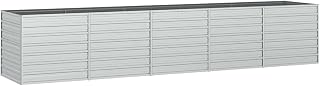


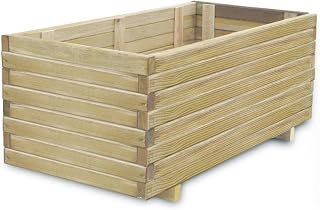


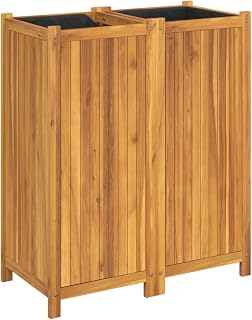


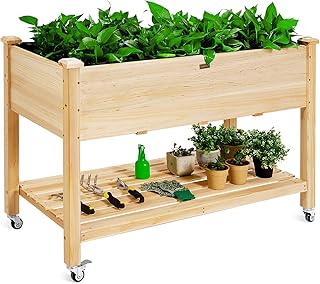


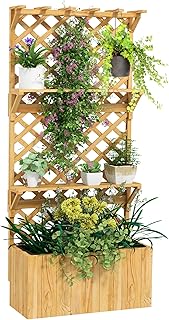


Raised beds and elevated planters can make gardening easier to organise, especially where garden soil is compacted, poorly drained or difficult to work. They are also useful for balconies, terraces, patios, courtyards and small urban gardens where conventional planting directly into the ground is not practical. For shoppers in France, the right choice depends less on appearance alone and more on dimensions, material, drainage, planting depth, stability, exposure to weather and the type of plants you intend to grow.
When comparing raised garden beds and planters, consider the complete growing environment rather than simply choosing the largest or cheapest model. A deep wooden planter may be excellent for vegetables but unnecessarily heavy on a balcony. A narrow metal planter can work well on a terrace but may need careful positioning in full sun. Likewise, a raised bed designed for garden soil is not automatically suitable for a paved surface.
This guide focuses on the practical criteria that matter when comparing raised beds, elevated vegetable gardens and outdoor planters available to buyers in France. It also explains materials, construction, drainage, dimensions, maintenance, placement and common purchasing mistakes so you can narrow down the options according to your space and gardening plans.
The terms are often used interchangeably, but there is a useful distinction. A raised bed generally describes a larger growing area lifted above the surrounding ground, while a planter is usually a self-contained container with a base. Some raised garden beds are open-bottomed and sit directly over existing soil; others are fully enclosed containers that require their own growing medium.
An open-bottom raised bed can be particularly useful when you want to improve the structure of existing garden soil while increasing planting height. A contained planter is more versatile for terraces, patios and balconies because it does not depend on access to natural ground.
Measure the intended location before comparing products. External dimensions tell you how much floor space the structure occupies, but internal dimensions determine how much usable growing space you actually receive.
Width is particularly important. A very wide raised bed may offer plenty of planting area but make it difficult to reach the centre without stepping into the bed. For accessible maintenance, a design that can be reached comfortably from several sides is usually easier to manage than an oversized container.
Also check the overall height. A low raised bed can provide better soil organisation without dramatically changing the appearance of a garden, while a waist-height elevated planter can reduce the need to bend. The latter, however, generally requires a stronger frame and stable support.
Depth should match the plants you intend to grow. Herbs and many salad crops can perform well in relatively shallow containers, while root vegetables and plants with more substantial root systems need greater soil depth.
Before buying, check the actual internal planting depth rather than relying on the product name. Decorative raised planters can sometimes look substantial from the outside while providing less growing volume than expected.
Drainage is one of the most important technical considerations. Excess water can create saturated growing media and restrict healthy root development. A planter should therefore have an effective way for surplus water to leave the growing area.
Check whether drainage holes are already provided, where they are positioned and whether the structure allows water to escape freely when placed on its intended surface. A planter positioned directly against an impermeable terrace surface needs particular attention to drainage because excess water cannot simply disperse into surrounding soil.
Do not assume that more drainage holes are always better. The objective is controlled drainage that retains sufficient moisture for plants while preventing prolonged waterlogging.
Wood remains a popular choice because it has a natural appearance that works well in gardens, allotments and traditional outdoor spaces. Timber can also provide a substantial structure for larger raised beds.
When comparing wooden models, look at the type and thickness of the timber, the construction method, corner reinforcement, fasteners and the way the wood is intended to cope with outdoor exposure. The condition of the wood over time depends on its construction, location, moisture exposure and maintenance requirements.
Pay attention to the treatment used on the timber and follow the manufacturer's guidance regarding gardening use. If you plan to grow edible crops, check the manufacturer's information concerning the intended application of the treated wood rather than making assumptions based solely on appearance.
Metal provides a different visual style and can be particularly attractive in contemporary gardens and terraces. Galvanised steel and other corrosion-resistant finishes are commonly considered for outdoor applications because the material must cope with rain and changing temperatures.
Compare panel thickness, edge finishing, joining systems and structural rigidity. Thin panels may be adequate for some applications but can be less resistant to deformation during assembly or when filled with heavy growing media.
Metal can also behave differently depending on exposure. A planter positioned in full sun may experience significant surface heating, so plant selection, location and watering practices should be considered together with the material.
Plastic and resin products are often attractive where low weight, easy cleaning and straightforward handling are priorities. They can be particularly useful for balconies and smaller terraces, although the total filled weight still needs to be considered.
When comparing plastic planters, examine the wall thickness, base design, drainage arrangement and resistance to outdoor exposure. Very lightweight products can be convenient to move but may require careful positioning in exposed areas where wind could become a problem.
Composite raised beds can offer a middle ground between the appearance of timber and the reduced routine maintenance associated with some synthetic materials. The exact performance varies substantially between products, so do not treat every composite planter as equivalent.
Check the manufacturer's stated construction, expected outdoor application, assembly system and maintenance instructions. The quality of the frame, fasteners and joints can be just as important as the panel material itself.
An open-bottom raised bed can allow plant roots to interact with the underlying ground, depending on construction and soil conditions. This can be useful in gardens where you want to build a defined growing area above existing soil.
A fully enclosed planter is more flexible because it creates an independent growing environment. This makes it appropriate for hard surfaces such as paving, decking and terraces, provided the surface can safely support the resulting load.
Weight is easy to underestimate. A planter that feels light when empty can become considerably heavier once it contains soil or growing medium and water. This matters particularly on balconies, roof terraces and other elevated locations.
Do not evaluate a large planter solely by its empty weight. Consider the total load created by the container, growing medium, retained water, plants and any accessories. Where structural loading is uncertain, obtain appropriate advice before installing a large or heavily filled planter.
For balconies and terraces, several smaller containers may sometimes be easier to position and rearrange than one exceptionally large planter. However, distributing containers does not automatically resolve structural-load limitations, so the capacity of the surface remains the key consideration.
Urban gardening requires a different selection process from choosing a large raised bed for a garden. Floor area is limited, access can be awkward and wind exposure may be greater. A compact planter with a practical footprint can therefore be more useful than a large model with impressive capacity.
Measure doors, stairways, lifts and access routes before ordering a bulky planter. Assembly requirements matter as well. A product that arrives as panels or sections may be easier to bring into a restricted space than a fully assembled structure.
For balconies, prioritise stability, manageable dimensions, drainage and total loaded weight. Avoid placing a tall, lightweight planter where strong winds could cause instability, particularly if the plants themselves create a large surface area above the container.
Vegetable gardening is one of the most common reasons for buying a raised bed. The ideal configuration depends on the crops being grown rather than on the idea that one size fits every vegetable.
Leafy greens, salad crops and many herbs can make productive use of smaller planters. Crops with larger root systems may require more depth and volume. Tomatoes and other vigorous plants may additionally need adequate support and sufficient root space.
Smaller elevated planters can be particularly convenient for herbs and frequently harvested salad crops. Positioning them close to a kitchen or outdoor seating area can make regular harvesting easier, although the location should still provide suitable light for the plants selected.
For herbs, drainage and planting depth should be matched to the individual varieties. Mediterranean herbs generally have different moisture preferences from plants that naturally grow in consistently moist conditions, so a single planter should not automatically be treated as suitable for every herb.
France covers a wide range of climates, from Atlantic and northern conditions to Mediterranean areas and colder continental or mountainous regions. Consequently, there is no single planter material or configuration that is ideal everywhere.
Consider the conditions at the exact installation site. Rain exposure, frost, summer heat, wind, shade and seasonal temperature variation can all influence the practical performance of an outdoor planter.
Good drainage does not mean allowing the growing medium to dry out immediately. The aim is to maintain an appropriate balance between water availability and aeration around the roots.
Container dimensions, growing medium, weather and plant demand all affect watering frequency. A deep planter may retain moisture differently from a shallow container, while a dark container exposed to direct summer sun can behave differently from a shaded wooden bed.
Inspect the drainage system periodically. Leaves, roots, compacted growing media and debris can interfere with water movement. If a planter repeatedly remains saturated after ordinary rainfall, investigate the drainage arrangement rather than simply increasing watering intervals.
The container is only one part of the growing system. The growing medium determines much of the planter's water retention, aeration, drainage and nutrient-holding behaviour.
Avoid treating all garden soil as interchangeable with a container-growing medium. Soil taken directly from a garden can behave differently when confined inside a raised planter, particularly if its structure becomes compacted. Select a growing medium appropriate to the plants and the container system, while following recommendations for the specific crops you intend to grow.
Remember that filling a large planter is a substantial material requirement. Compare internal volume before purchase so you understand how much growing medium will be needed. This can also influence the overall cost and final weight of the installation.
Two raised beds with similar dimensions can differ significantly in construction quality. Look beyond photographs and examine the technical specification wherever possible.
Height affects both ergonomics and stability. A low raised bed still requires some bending, but it may integrate naturally into a garden. A taller planter can make planting and harvesting more comfortable for people who prefer to work at a higher level.
However, increasing height also increases the importance of structural stability. A tall planter with a narrow footprint can be more vulnerable to tipping, particularly when exposed to wind. The ideal design therefore balances working height with base width, weight and the surrounding environment.
An elevated planter is worth considering when accessibility, patio use or space limitations are more important than maximising growing volume. These structures bring the growing area higher above the ground and can make everyday tasks easier to organise.
They can also work well in courtyards and paved areas where digging a traditional bed is impossible. The trade-off is that elevated containers typically provide less total growing volume than large ground-level beds of the same footprint, and their support structure must safely handle the filled load.
A planter can look excellent in product photographs while being unsuitable for your intended location. Always compare dimensions, capacity, drainage, material and assembly requirements before deciding.
External measurements do not tell you how much space is actually available for roots. Compare the internal planting area and depth where those specifications are available.
Large containers become heavy when filled. This is particularly important for balconies, roof terraces and raised structures.
Extra depth is not automatically an advantage. It can increase the amount of growing medium required, add weight and raise the purchase and installation effort without providing meaningful benefits for shallow-rooted plants.
Lightweight planters can be vulnerable in exposed locations. Tall plants can also act like sails, increasing the importance of stability.
Do not assume drainage will be adequate simply because the product is marketed for outdoor gardening. Check the actual design and consider where the water will go once the planter is installed.
A large raised bed may fit the final location but be difficult to transport through a doorway, staircase or narrow passage. Assembly dimensions and delivery access should be considered before purchase.
A simple comparison framework can make the buying process much easier. Start by eliminating products that do not fit your space or planting requirements. Then compare the remaining options based on construction, drainage, material and long-term practicality.
Brand recognition can be a useful starting point, but it should not replace product-level comparison. Depending on the type of garden equipment and planter available in the French market, shoppers may encounter established names such as Outsunny, vidaXL, Gardena, Elho, Lechuza, Keter, Nature, Hozelock and VegTrug.
The best choice is not necessarily the most familiar brand. Compare the exact model's dimensions, construction, material, drainage, capacity and intended use. A well-specified compact planter from one manufacturer may be more suitable for a balcony than a larger product from a better-known brand.
There is no universally superior material. The right choice depends on the environment and the balance you want between appearance, weight, maintenance and durability.
Garden installations provide more flexibility because the structure can often be placed directly on soil and surrounded by other planting. Terraces impose additional constraints, including drainage, load, surface protection and access.
On a garden site, an open-bottom raised bed may make sense when the underlying soil is suitable. On a terrace, a fully contained planter is usually the more relevant category. In either case, the location should be prepared before filling the structure because moving a fully loaded planter can be difficult or impractical.
Wooden structures should be inspected periodically for signs of deterioration, loose joints, damaged panels and moisture-related problems. Keep the structure consistent with the manufacturer's maintenance recommendations and avoid assuming that every outdoor timber treatment is interchangeable.
Pay particular attention to areas that remain damp for extended periods. Good drainage around the planter can help prevent unnecessary water accumulation against the lower sections of the structure.
Inspect metal planters for scratches, damaged finishes, loose fixings and areas where corrosion may begin. Keeping drainage pathways clear is also important because standing water can create unnecessary stress on components and surfaces.
Where a product has a protective coating, follow the manufacturer's cleaning and maintenance recommendations rather than using aggressive chemicals or abrasive tools that could damage the finish.
Plastic and composite containers generally require straightforward cleaning, but maintenance should still include checking drainage holes, joints, supports and signs of material damage. Strong impacts, extreme weather and prolonged outdoor exposure can affect different materials in different ways.
At the end of a growing season, remove dead plant material and inspect the interior before preparing the planter for the next crop. Cleaning can also make it easier to identify drainage problems or structural damage.
Raised planters allow gardeners to organise crops by location and growing medium, but they do not eliminate seasonal weather risks. Winter frost, heavy rainfall, summer heat and strong winds should all be considered when selecting the container and its position.
Plants in containers can experience temperature and moisture changes differently from plants growing directly in the ground. The size and material of the container, its exposure to sun and wind, and the characteristics of the growing medium all influence how quickly conditions change around the roots.
Start with the space rather than the product catalogue. A useful planter should leave sufficient room for walking, harvesting, watering and routine maintenance. On balconies and terraces, also account for doors, railings, furniture and drainage routes.
For gardens, consider whether you want one large growing zone or several smaller beds. Multiple beds can make crop rotation, access and organisation easier, while a single large structure can simplify installation and create a more unified appearance.
Customer reviews can provide useful information when they are used correctly. Instead of focusing only on the overall rating, look for repeated comments about the exact characteristics that matter to you.
Give more weight to recurring observations than to isolated comments. Product versions can also change over time, so confirm that reviews correspond to the same model or configuration you are considering.
There is no single price point that represents the best value. Cost should be considered alongside material quantity, dimensions, construction quality, accessories, maintenance requirements and expected service life.
A low-cost planter may be excellent value if it meets your needs and has appropriate construction. Conversely, paying more for unnecessary capacity can be poor value if the additional size creates excessive weight or requires more growing medium than you need.
When checking prices in France, compare equivalent dimensions and specifications rather than comparing headline prices alone. Also check whether supports, covers, trellises, liners or other accessories are included or sold separately.
Accessories can significantly change the usefulness of a raised bed. The right additions depend on the crops, location and growing season.
One major advantage of elevated gardening is that the growing surface can be positioned higher than conventional ground-level beds. This can make routine tasks such as planting, inspecting leaves and harvesting more convenient for some gardeners.
However, accessibility depends on more than height. Width, reach distance, seating position, stability and the ability to approach the planter from different sides all influence how comfortable it is to use.
When comparing products, consider the full life cycle rather than focusing exclusively on the material name. A durable planter that remains useful for many seasons may be more practical than a disposable alternative that needs frequent replacement.
Look at repairability, replaceable components, construction method, maintenance requirements and whether damaged parts can be replaced. Packaging and transport considerations can also matter, particularly for very large products.
Before purchasing a raised bed or planter, compare the exact product specifications and make sure they match the conditions at your home. The most suitable option should fit your available space, provide enough root volume, manage excess water effectively and remain stable once filled.
For shoppers comparing products from brands such as Outsunny, vidaXL, Gardena, Elho, Lechuza, Keter, Nature, Hozelock and VegTrug, evaluate the individual model rather than assuming that every product from a particular brand has the same construction or intended use.
For current buying decisions in France, check the latest dimensions, material information, assembly instructions, customer feedback and retailer pricing before ordering. Product specifications, configurations and availability can change during 2026, so the information displayed on a current product listing should take priority over older descriptions.
The best type depends on the garden, crops and desired maintenance level. Wooden, metal, composite and synthetic raised beds can all be suitable when their dimensions, drainage and construction match the intended application.
Yes. Raised planters can be suitable for many vegetables, provided they offer adequate root space, drainage, growing medium and light. Always check the mature requirements of the crops you plan to grow.
They can be, but balcony installations require particular attention to total weight, stability, dimensions and drainage. A large container filled with growing medium and water can become substantially heavier than its empty weight suggests.
Neither is universally better. Wood offers a traditional natural appearance, while metal can provide a contemporary look and rigid construction. Compare the exact material, thickness, finish, maintenance requirements and installation environment.
A fully enclosed planter generally needs an effective drainage system so excess water can leave the growing area. The exact design depends on the construction and intended installation surface.
There is no universal depth. Choose a depth based on the root requirements of the plants you intend to grow. Herbs and leafy crops may need less depth than crops with larger or deeper root systems.
Yes, many raised beds are designed to sit directly on garden soil. Whether an open-bottom design is appropriate depends on the existing ground, drainage conditions and the crops being grown.
Yes, a fully contained planter can be used on suitable paving, terraces or patios, provided the surface can support the filled weight and the drainage arrangement is appropriate.
Depending on the category and current French market availability, shoppers may encounter brands including Outsunny, vidaXL, Gardena, Elho, Lechuza, Keter, Nature, Hozelock and VegTrug. Compare individual models carefully because dimensions and construction vary within each brand.
Check the exact dimensions, internal planting depth, material, drainage, assembly method, included accessories, weight, customer feedback and intended use. For balconies and terraces, also consider the maximum practical loaded weight and stability.
No. Price alone does not determine suitability. A more expensive planter may offer features you do not need, while a reasonably priced model can be a better choice when its dimensions and construction match your requirements.
Start by defining the growing location, available dimensions, crops, required planting depth and preferred material. Then compare suitable products using construction quality, drainage, stability, maintenance and current customer feedback rather than relying on price or appearance alone.
The best raised bed or planter is the one that fits your space, plants and growing conditions rather than simply the largest or highest-rated-looking option. In France, local weather exposure, available space and installation surface should be considered alongside material, drainage, planting depth and construction quality.
A careful comparison of specifications can prevent the most common buying mistakes: choosing an unsuitable size, underestimating filled weight, overlooking drainage, selecting insufficient planting depth or buying a structure that is difficult to assemble and maintain. Use these criteria to compare current options, check the latest product information and choose a raised garden bed or planter that is practical for your particular growing environment.